
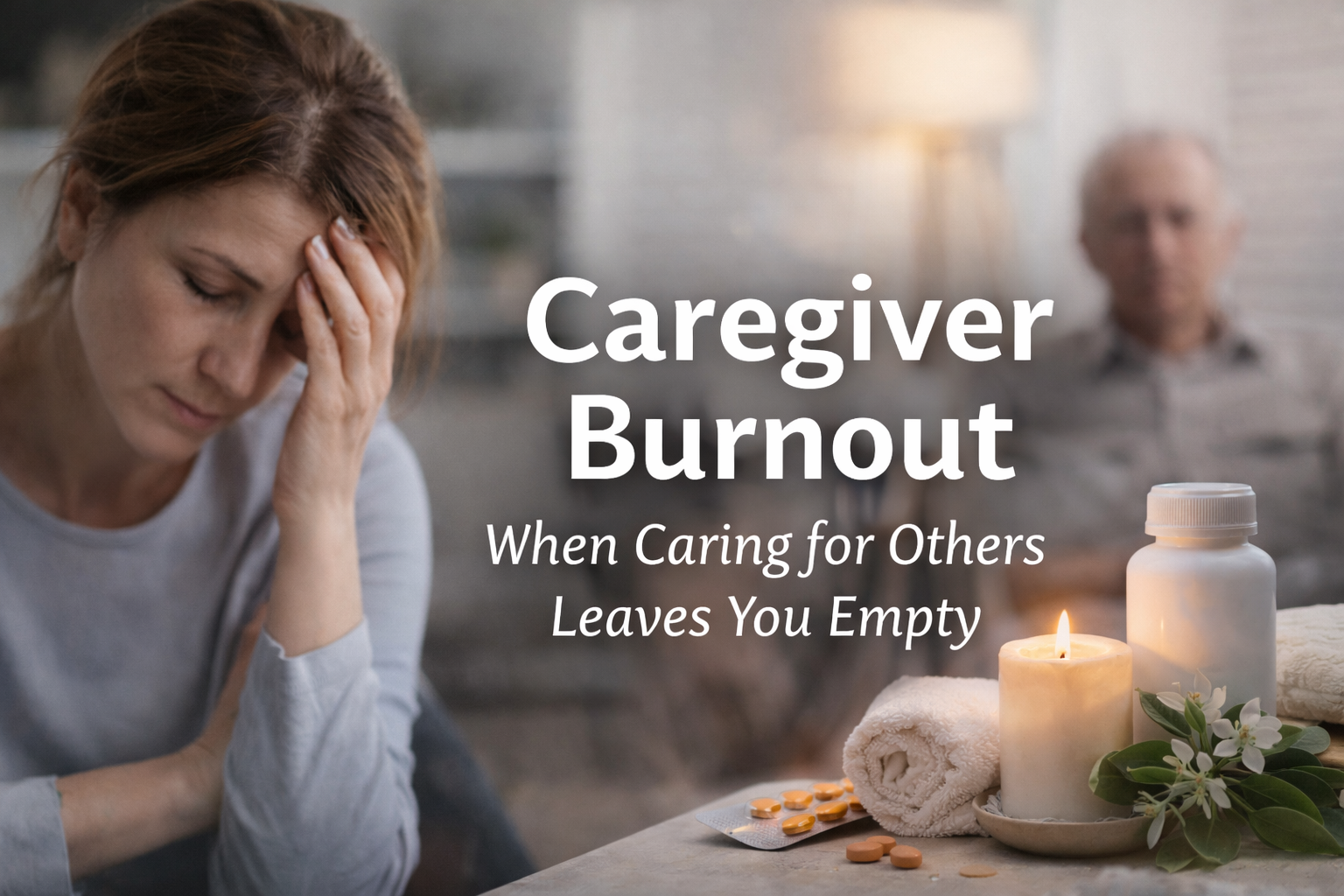
Caregiver Burnout: When Caring for Others Means Forgetting Yourself
Caregivers carry invisible weight.
Whether you are supporting an aging parent, a spouse, a child, or a loved one with health challenges — care-giving requires emotional, physical, and mental energy.
Often, caregivers prioritize everyone else first.
Over time, this can lead to burnout.
What Caregiver Burnout Looks Like
Burnout is not weakness. It is nervous system overload.
Signs may include:
- Chronic fatigue
- Irritability
- Muscle tension
- Sleep disruption
- Feeling emotionally numb
- Increased illness
Many caregivers ignore these signals because they feel they “don’t have time” to stop.
But ignoring your own needs reduces your ability to care effectively.
The Physical Toll of Care-giving
Stress hormones remain elevated. Muscles stay tight. The immune system becomes strained. Inflammation increases.
Your body absorbs the responsibility you carry.
Why Self-Care Is Not Selfish
Self-care is maintenance.
When you receive therapeutic support:
- Stress hormones lower
- Muscles release
- Sleep improves
- Emotional resilience strengthens
Deep Muscle Therapy, Manual Lymphatic Drainage, reflexology, and cranial-sacral therapy can all support caregivers in restoring balance.
Even one hour of structured care can reset your nervous system.
You Matter Too
You cannot pour from an empty cup.
Taking time for yourself is not indulgent — it is essential for sustainability.
If you are caring for someone else, let someone care for you.
📞 226-889-5654
📍 625 Turnberry Street, Brussels, Ontario


